
What Delaware County Deed Records Convey
Recording deeds is the Delaware County Recorder's core duty. The office receives instruments affecting real estate. It indexes them. It furnishes copies or certificates on request. A recorded deed names the grantor and grantee. It states the consideration, and it carries execution and recording dates. The deed also holds a legal description plus a book and page or instrument number. What the deed actually accomplishes depends on its language and the surrounding chain of title. So the full document deserves a close read.
| Deed form | Recorded function | Typical trail |
|---|---|---|
| Warranty deed | Conveys the described interest with stated covenants | Ordinary purchase and sale |
| Quitclaim deed | Conveys whatever interest the grantor may hold | Claim release, correction, or family transfer |
| Trustee or personal-representative deed | Conveys under trust or estate authority | Trust administration or probate sale |
| Sheriff's or tax deed | Records a transfer following a statutory or court process | Foreclosure or tax-sale sequence |
Not every instrument transfers ownership outright. A deed conveys an interest, a mortgage secures a debt, a lien flags a claim, and a release clears an earlier instrument. Since the Recorder indexes all of these together, a deed-only query leaves the chain incomplete. Pull the neighboring records too.
Inside the Delaware County Recorder's File
The Recorder sits at 100 W Main Street, Room 209, Muncie, Indiana 47305, and answers at 765-747-7804. Its real-estate series reaches well beyond deeds. Mortgages, assignments, modifications, releases, easements, rights-of-way, plats, covenants, and mechanic's liens all sit in the files, alongside affidavits, probate instruments, court orders, sheriff's deeds, tax deeds, and street or easement vacations.
That breadth is why the full image matters. An index row cannot show whether a deed reserves minerals, incorporates a plat, excepts a tract, or cites a corrective instrument. Copy the exact description and every cross-reference before treating two similarly named parcels as the same land.
Laredo and Tapestry Offer Two Search Routes
The Delaware County Fidlar brochure lays out two online routes. Laredo suits frequent searchers through subscription or minute arrangements, while Tapestry works pay-as-you-go for occasional lookups and images. Confirm current terms before buying, since the brochure's prices are dated.
| Route | Best suited to | Available clues | Fallback |
|---|---|---|---|
| Laredo | Repeated deed research | Names, dates, types, descriptions, images | Recorder for account or terminal help |
| Tapestry | Occasional instrument lookup | Names, dates, subdivision, parcel, metes and bounds, type | Recorder for price or missing image |
| Office counter | Old, unindexed, or hard-to-read material | Books, older indexes, terminals, copies | Mail or focused APRA request |
Note: Preserve the effective date of any fee sheet; a historical Delaware County price is not a current quote.
Search the Delaware County Deed Index Precisely
Start from the assessed-owner spelling in Delaware County property search. Then test variants. Initials, former names, entity suffixes, trusts, and estate wording all hide matches. The direction of a transaction may be unclear. Run the same party in both the grantor and grantee indexes then.
| Index field | Entry | Refinement |
|---|---|---|
| Grantor / grantee | Person, entity, trust, or estate | Exact indexed spelling plus reasonable variants |
| Date range | Beginning and ending recording dates | Narrow around a sale, death, release, or court event |
| Document type | Deed, mortgage, release, lien, easement, plat | Run connected types separately |
| Legal description | Subdivision, parcel ID, lot/block, metes-and-bounds phrase | Pair with book/page or instrument citation |
| Image / print | Complete recorded pages | Inspect exhibits, stamps, and prior references |
Walk Delaware County's Grantor-Grantee Chain
A grantee receives the stated interest. A grantor conveys it. To build a backward chain, start with the newest confirmed deed and identify its grantor, then search that person as a grantee in an earlier period, repeating the step until the chain reaches its beginning.
- Confirm the present parcel and retrieve the newest deed's complete image.
- Record the parties, deed type, recording date, instrument or book/page, and full legal description.
- Search the grantor as an earlier grantee and open the candidate acquiring deed.
- Repeat while separately following plats, mortgages, assignments, releases, easements, corrections, and court references.
- Grantor
- The party conveying the stated interest.
- Grantee
- The party receiving the stated interest.
- Chain of title
- The linked sequence of instruments affecting the described land.
- Book/page or instrument number
- The durable citation used to retrieve a recorded document.
The 1982 Online Cutoff Is Not the Beginning
The Fidlar brochure puts online indexes and images at 1982 to the present. That cutoff is not the start of the county's records. A 1981 deed may still sit in county custody. So use the current deed's prior-instrument reference, and ask the Recorder about earlier indexes, books, or microfilm.
Delaware County dates to 1827. The Indiana State Library county guide lists deed books 1–4 covering 1828–1840. It also lists books 5–7 for 1840–1845, and a tract book. Expect early entries keyed to township, survey, adjoining-owner, or addition descriptions. A modern parcel number may not appear in them.
| Era | Likely access | Bridge backward |
|---|---|---|
| 1982–present | Fidlar and Recorder | Name, date, type, parcel or subdivision |
| Pre-1982 | Recorder books, older indexes, microfilm | Prior citation, grantor, addition, STR |
| Early county era | Recorder, State Library, IARA | Tract book, township, survey, historic owner map |
A Recorded-Name Alert Adds an Early Warning
County outreach in 2025 encouraged residents to enroll in the free Property Fraud Alert service. A Fidlar lifecycle document from February 2024 also mentions alerts, indexing workstations, and SSN redaction. The service itself is simple. When a document carrying a registered name is recorded, the subscriber gets a notice.
The official enrollment page displays the public signup interface.
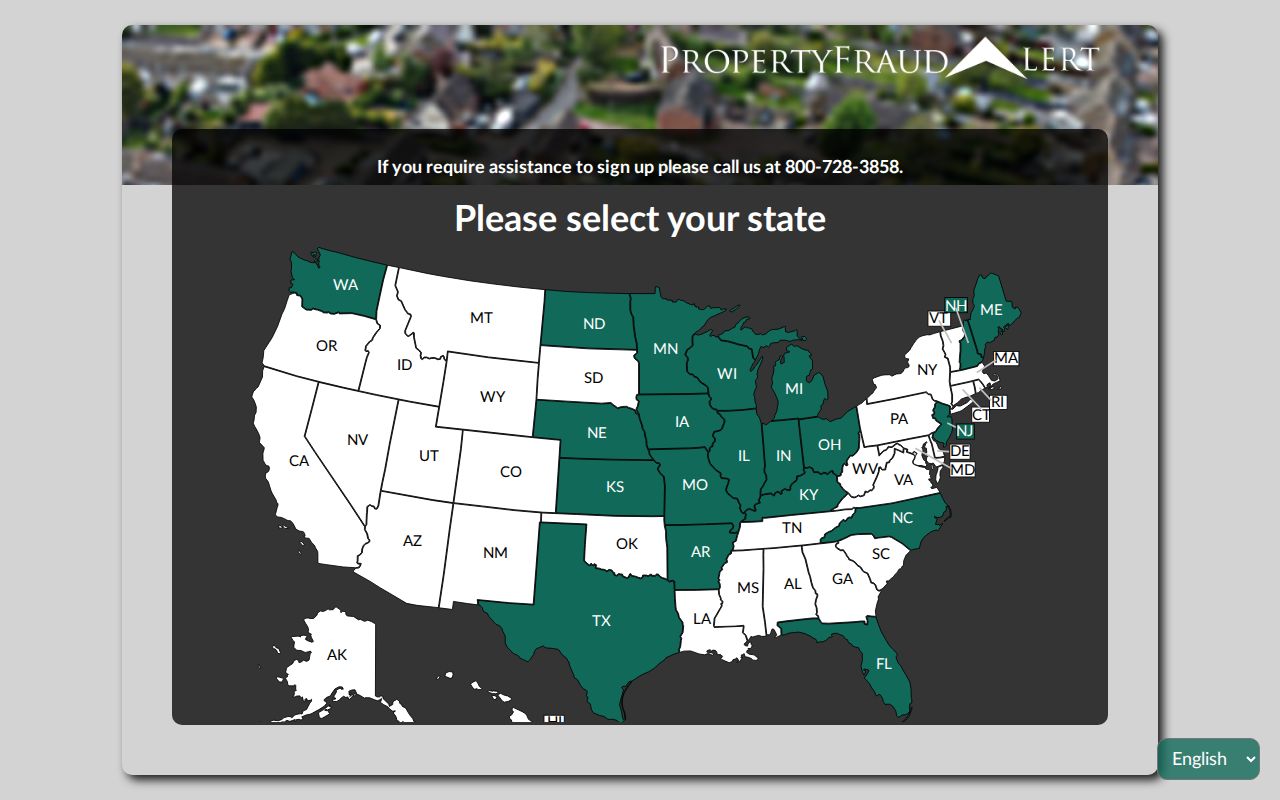
An alert does not block a filing or decide whether fraud occurred. Verify any unexpected notice with the Recorder, then turn to legal or law-enforcement channels if warranted.
Obtain a Delaware County Deed Copy
An available Fidlar image works fine for a quick view or print. Official needs demand more. For a missing year, an illegible page, an exhibit, or a certified copy, give the Recorder the instrument number or book and page. Include the parties' names, the recording date, the document type, and any legal-description clue. Ask whether the copy will be plain or certified. Also ask whether delivery comes electronically, by mail, or at the counter.
A schedule dated July 1, 2017 listed ordinary copies up to 11 by 17 inches at $1 per page. Larger copies ran $5 per page. Certification cost $5. Those figures may have changed, so confirm current charges at 765-747-7804. Indiana's APRA, IC 5-14-3, offers a focused request path for identifiable public records. It applies subject to its exceptions. It does not waive authorized copy or certification fees.
Recorded, not guaranteed. Delaware County deed records show accepted and indexed instruments. Recording does not repair a flawed description, eliminate unrecorded interests, prove a boundary, or replace a professional title examination.
Bridge Historic Owners to Modern Parcels
An old deed rarely names the street you drive past today. Muncie became a town in 1854 and a city in 1865. The decades after brought additions, new streets, subdivisions, utilities, and annexations. Early Delaware County deed records instead point to a tract, a township, or a neighboring owner. Some name a town addition instead. That is why a modern address often fails as a starting point for historic work.
The State Library's Delaware County maps, atlases, and plat books can bridge that gap. Pull a candidate owner surname, road alignment, addition, or plat citation from them. Then take that clue back to the deed books or tract book. Verify the instrument itself there. Remember that an 1874 owner map is a dated finding aid. It cannot be overlaid on modern GIS as legal proof of a boundary.
Named additions also give you durable search strings. Local records place Galliher Subdivision at Plat Book 2, page 56. Anthony Park Addition sits at Plat Book 2, page 71. Eden Acres City View appears as Instrument 2022R15808. Citations like these beat a neighborhood nickname every time. They lead straight to the recorded plat and its dedication, easement, and lot language.
Keep the Legal Description Attached to the Chain
Matching surnames across consecutive deeds proves nothing by itself. To show that each instrument concerns the same Delaware County land, compare lot and block and the subdivision or addition. Also compare section-township-range, acreage, exceptions, metes-and-bounds calls, and every cited plat or prior instrument. Parcel IDs make handy crosswalks. But they can change after a split, combination, or correction. The assessor's shortened description never replaces the recorded text.
A phrase like “PT” of a quarter-section tells you only that part of a parent tract is involved. Chase down the deed that carved out the part and the remainder deed. Track the neighboring parcels too, and any survey or plat the text references. Suppose an old plat shows a street, alley, or railroad corridor that looks different on Beacon today. Search then for a dedication, vacation, easement, or acquisition instrument. Do not read ownership straight off the map.
Municipal planning files can close the remaining gap. Yorktown requires recorded written commitments and approved subdivision plats. Muncie files may cite a plat book or instrument. Albany keeps improvement-location permit plans on file at Town Hall as public records. These supplement the Recorder's deed records but never take the place of the recorded instrument.
Check Every Delaware County Deed Image
Cite an online deed only after checking the image end to end. Confirm every page and signature is present. Check the acknowledgment, exhibit, and legal-description attachment too. Look for the recording stamp and any later correction reference. The February 2024 Fidlar lifecycle material describes redaction and indexing work within the modern system. Even so, an older scan may be faint, cropped, misindexed, or separated from an exhibit.
When legibility or completeness matters, ask the Recorder. See whether the original can be inspected. A higher-quality image, microfilm, or another recording copy may work too. A certified copy confirms that the document you hold matches the official record. It offers no title opinion on the instrument's legal effect.